
Marketing Burnout is Real, Let’s Fix That
by Laurel B. Lujan
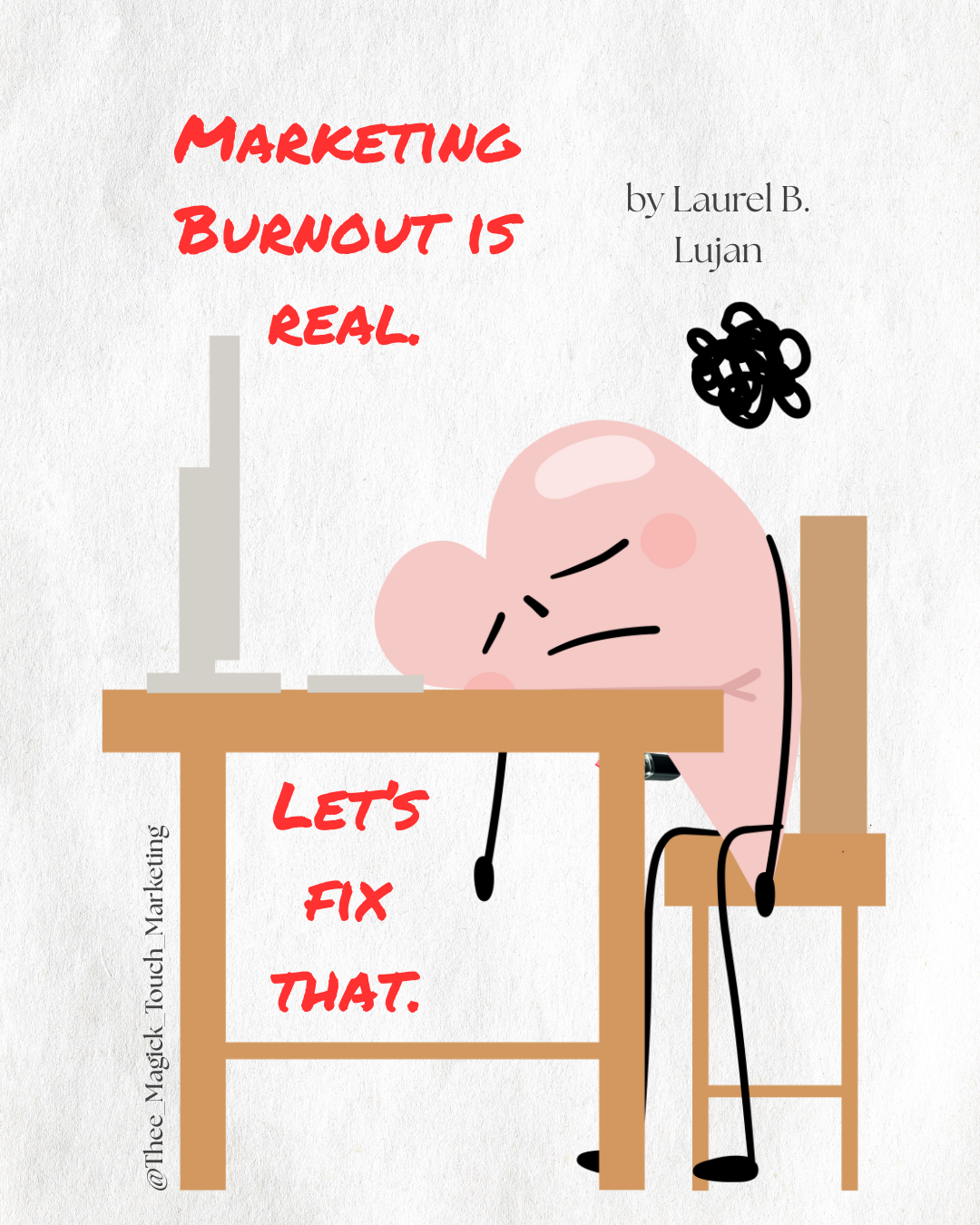
Marketing burnout is more common with the demand to produce online content to gain exposure towards your business. Eventually it becomes tiring when there’s a lack of views, interaction and financial gain.
As an independent business, it can be an exhilarating experience to have something to call your own; to personalize your branding, creating your website and completing the official paperwork to make it- well, official. However, if you’ve been running your business for a while and marketing still feels overwhelming this article is for you to understand your options.
Your Marketing Options
There’s a couple of options to advertise-having your own official website that utilizes SEO (Search Engine Optimization), word of mouth, traditional media and last but not least social media. They’re great tools but not every marketing tool will be appropriate for you.
On a deeper aspect for all of these platforms it can be essentially done for free without it being expensive if you know what you’re doing. For example with SEO, the owner will need to research the appropriate key words to insert on the back pages such as the settings, backlinks and to enhance the SEO to hopefully appear on the first page of a search engine website organically. The down side is that the first search results are often ‘sponsored’ which pay top dollar to be seen first despite them not always being the correct business the consumer is searching for. When paying to be on the first page, it would depend on the package but it can ultimately end up being the most expensive if it’s not the best option for your specific product and/or services. Furthermore, longevity can have a higher rate of succeeding in organic leads and in the use of SEO especially if the business owner knows how to read the analytics properly, KPI’s and further utilize this to their advantage.
Compared to social media, it is one of the most tangible forms of free advertisement since a business is trying to not only establish their brand but to connect to their customers in a variety of ways that should align with their values. Whether it’s through creative posts, videos or lives it depends on what the business owner wants to do. But here are the hang ups.
The algorithm is always changing. With the latest uses of AI, often it is programmed and it will eventually ‘learn’ a user’s algorithm and their interests. In contrast, it doesn’t always work with the poster since social media also works with the best interest of the platform first, the consumers second and the business first. UNLESS:
The business pays for the ads based on the objectives: increase followers, increase bookings, sell items, gain brand recognition, etc. which will bring the posts to the forefront according to the niche audience you;ve honed in on. Meta for example has the ad plans set up as such-based on the number of days and the amount of people the business wants to reach which means it’ll make the cost higher. Of course, the business gets to set the parameters in terms of locations and interests to hopefully gain the attention of the right consumer. I do recommend this sometimes but not all the time since organic advertising has more longevity.
Pushing content consistently can be demotivating. The new term for this is influencer fatigue where both influencers and the audience are negatively affected because of the over exposure to ads specifically geared towards sales. In reference to my previous post, consumers prefer authenticity not over curated content that feels ingenuine. So when ads or posts are pushed too frequently there is lower engagement from the audience’s side as they become disinterested. A case can also be made that the influencers AKA the businesses no longer feel inclined to post due to lack of decreased engagement, and lower ROI when they take the time to curate content including ads for their business. The question that pops up eventually when businesses attempt to market via social media giving it all they’ve got is-what’s the point?
That’s where a marketing specialist comes in—not only to guide your strategy, but to help you avoid creative burnout. They can brainstorm fresh ideas, build a realistic content calendar aligned with your goals, and offer an objective perspective on what’s working and what isn’t. By shifting the focus from constant selling to authenticity and brand storytelling, businesses can combat influencer fatigue and build long-term connections with their audience. If you’ve already tried doing it all yourself and feel stuck, a marketing specialist can help you move forward with clarity. Take the dive and book an appointment to reach your potential.
